
Teapot
Unknown Artist
early 19th century
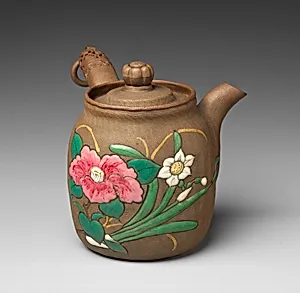
Medium
Pottery ornamented with enamels (Banko ware)
Dimensions
H. 2 1/2 in. (6.4 cm)
Classification
Ceramics
Culture & Period
Japan · Edo period (1615–1868)
Department
Asian Art
Museum
Metropolitan Museum of Art, New York, NY
Credit
Edward C. Moore Collection, Bequest of Edward C. Moore, 1891
Accession Number
91.1.204
Rights
Public Domain
Art Historical Context
This delicate teapot, crafted in the early 19th century during Japan's period (1615–1868), the refined artistry of Banko ware type of pottery renowned for its vibrant enamel decorations applied over a glazed surface. Standing just 2½ inches (6.4 cm) tall, its petite scale suggests it was designed for intimate tea gatherings or as a collector's treasure, reflecting the era's thriving tea culture amid Japan's isolationist policies. Banko ware emerged in the late 18th century in Mie Prefecture, where potters like Banko Yaichi perfected techniques for molding porcelain-like bodies and firing colorful enamels to create intricate, durable designs. This teapot's enamel ornamentation highlights the medium's significance: enamels allowed for bold, enduring hues that captured floral motifs or landscapes, blending functionality with aesthetic delight in everyday ceramics. Now part of the Metropolitan Museum of Art's Asian Art collection, this piece entered through the Edward C. Moore Collection bequest in 1891, underscoring its appeal to 19th-century Western collectors. A charming window into Edo Japan's material culture, it invites us to appreciate the subtlety and skill behind such modest yet masterful objects.