
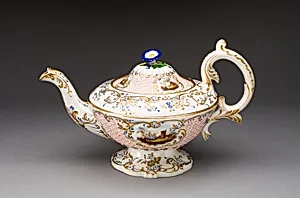
Teapot
c. 1840
Medium
Porcelain with polychrome enamels and gilding
Dimensions
18 × 17.8 × 30.1 cm (7 1/16 × 7 × 11 7/8 in.)
Classification
teapot
Department
Applied Arts of Europe
Museum
Art Institute of Chicago
Accession Number
94534
Rights
Public Domain
Art Historical Context
This elegant teapot, crafted around 1840 by the renowned English firm Spode Limited, exemplifies the refined artistry of European porcelain production during the early Victorian era. Standing 18 centimeters tall, the piece is made of delicate porcelain adorned with vibrant polychrome enamels and delicate gilding. Such decorative techniques highlight the skilled hand-painting and luxurious finishes that transformed everyday objects into statements of taste and sophistication for affluent households. In the mid-nineteenth century, tea drinking had become a central ritual in British social life, driving demand for finely decorated teawares. Spode Limited, based in Staffordshire, contributed to this trend by producing high-quality porcelain that blended functionality with ornamental beauty. The teapot’s graceful form and colorful embellishments reflect the period’s appreciation for both utility and aesthetic pleasure in domestic settings. Housed in the Art Institute of Chicago’s Applied Arts of Europe collection, this work invites viewers to consider how industrial advancements and artistic traditions merged to elevate ordinary items like teapots into enduring examples of cultural heritage.
About the Artist
Spode Limited
**Spode Limited** is an iconic English brand of pottery and homewares headquartered in Stoke-on-Trent, England, renowned for its contributions to the Industrial Revolution-era ceramics industry. Founded by Josiah Spode (1733–1797) in 1770, the company traces its roots to the purchase of works in 1776 on Church Street in Stoke. Josiah Spode, who had apprenticed under the prominent potter Thomas Whi...