
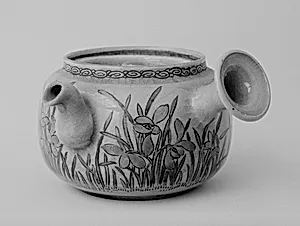
Teapot (Kyūsu)
Unknown Artist
mid-19th century
Medium
Stoneware with polychrome overglaze enamels (Kyoto ware)
Dimensions
H. 2 1/2 in. (6.4 cm)
Classification
Ceramics
Culture & Period
Japan · Late Edo (1615–1868) or early Meiji (1868–1912) period
Department
Asian Art
Museum
Metropolitan Museum of Art, New York, NY
Credit
Gift of Charles Stewart Smith, 1893
Accession Number
93.3.195a, b
Rights
Public Domain
Art Historical Context
This exquisite kyūsu, or teapot, from mid-19th-century Japan the refined artistry of Kyoto ware. Crafted from stoneware and adorned with polychrome overglaze enam, it stands just 2½ inches tall—perfectly sized for intimate tea servings. Kyoto ware, produced in the ancient capital, was renowned for its vibrant multi-colored enamel decorations applied over a glaze and fired at lower temperatures to preserve delicate hues, allowing for intricate designs that captured the elegance of Japanese aesthetics. Dating to the Late Edo (1615–1868) or early Meiji (1868–1912) period, this teapot bridges Japan's isolationist era of cultural flourishing—marked by the tea ceremony's (chanoyu) deep philosophical roots—and the transformative Meiji Restoration, when Western influences began reshaping society. Kyūsu like this were essential for brewing green tea, symbolizing hospitality and mindfulness in daily life. A generous gift to the Metropolitan Museum of Art from Charles Stewart Smith in 1893, it reflects early Western fascination with Japanese ceramics during the global Japonisme craze, preserving a snapshot of artisanal mastery for modern visitors.