
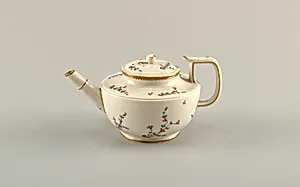
Teapot (Théière)
Classification
ceramics
Department
Smithsonian Collection
Museum
Smithsonian American Art Museum
Credit
Gift of George B. and Georgiana L. McClellan
Accession Number
1936-13-12-a,b
Rights
Public Domain
About this artwork
Research in Progress
Art Historical Context
Nestled in the Smithsonian American Art Museum's ceramics collection, this elegant teapot, known as a *théière*, hails from the esteemed Lille Porcelain Manuf in France, established around 1711.ed circa 1785 during the late Ancien Régime, it exemplifies the refined porcelain production that flourished in provincial French factories, rivaling the royal Sèvres works. Lille's artisans specialized in soft-paste porcelain prized for its delicate translucency and ability to hold intricate painted designs, though specifics of this piece's decoration await further research. In the 18th century, teapots like this one were symbols of sophistication, reflecting the growing popularity of tea drinking among Europe's aristocracy. Imported from Asia initially, European porcelain makers like Lille adapted the form with local flair, often incorporating neoclassical motifs amid lingering rococo elegance by the 1780s. This teapot, a gift from George B. and Georgiana L. McClellan, highlights the transatlantic exchange of luxury goods that enriched American collections. Today, it invites us to ponder the cultural rituals of a bygone era—where a simple pour of tea embodied leisure, conversation, and status—reminding visitors of porcelain's enduring allure as both art and everyday luxury.