
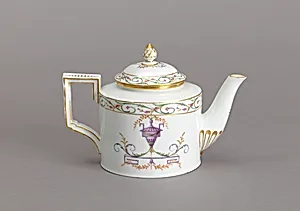
Teapot with Urn Pattern
Classification
ceramics
Department
Smithsonian Collection
Museum
Smithsonian American Art Museum
Credit
Bequest of Erskine Hewitt
Accession Number
1938-57-676-a,b
Rights
Public Domain
About this artwork
Research in Progress
Art Historical Context
Created by the Fürstenberg Porcelain Manufactory, one of Germany’s earliest porcelain producers established in 1747, this teapot dates from the final decades of the eighteenth century. During this period, European porcelain manufactories were refining techniques to create elegant tableware that combined functionality with refined decoration. The “Urn Pattern” suggests a taste for classical motifs, reflecting the Neoclassical interests that flourished across Europe after the rediscovery of ancient sites such as Pompeii. Porcelain objects like this teapot were highly valued for their translucency, durability, and ability to hold intricate surface designs. Fürstenberg’s products were sought after by aristocratic and middle-class households alike, serving both daily use and display. Now part of the Smithsonian American Art Museum’s ceramics collection through the bequest of Erskine Hewitt, the piece offers visitors a glimpse into the technical achievements and aesthetic preferences of late-eighteenth-century German craftsmanship.