
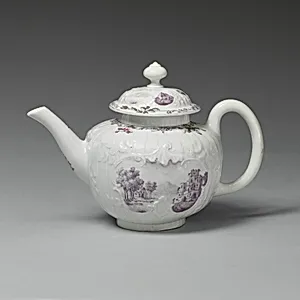
Teapot with ruins
ca. 1765–70
Medium
Soft-paste porcelain with enamel decoration
Dimensions
confirmed: 5 1/4 × 7 5/8 × 4 7/16 in. (13.3 × 19.4 × 11.3 cm)
Classification
Ceramics-Porcelain
Culture
British
Department
European Sculpture and Decorative Arts
Museum
Metropolitan Museum of Art, New York, NY
Credit
Gift of Mrs. Constance D. Stieglitz, in memory of her husband, Marcel H. Stieglitz, 1964
Accession Number
64.142.75a, b
Rights
Public Domain
Tags
Art Historical Context
This charming teapot, crafted by the renowned Worcester factory around 1765–70, exemplifies the height of British porcelain production during the Georgian era. from soft-paste porcelain refined, creamy material developed as an affordable alternative to expensive Chinese imports—the teapot features vibrant enamel decorations over a glossy glaze. Measuring a compact 5¼ × 7⅝ × 4⅜ inches, it was designed for intimate tea gatherings, a cherished social ritual among Britain's growing middle and upper classes. The surface boasts a picturesque scene of ruins nestled among houses and trees, evoking the Romantic taste for classical landscapes and Gothic revival motifs popular in 18th-century England. Worcester artisans excelled in these overglaze enamel techniques, firing colors at low temperatures to achieve delicate, jewel-like hues that captured the imagination of collectors. As one of England's pioneering porcelain centers, founded in 1751, the factory innovated with transfer-printing and hand-painting, making luxury wares accessible and fueling a national obsession with tea culture. Today, housed in the Metropolitan Museum of Art as a gift from Mrs. Constance D. Stieglitz, this teapot whispers of 18th-century refinement, blending functionality with artistry in a timeless British treasure.
About the Artist
Worcester factory · 1751–2008
The Worcester porcelain factory, established in 1751 in Worcester, England, by physician Dr. John Wall and apothecary William Davis along with 14 partners, marked the birth of one of Britain's most enduring ceramic enterprises. Investing £4,500 at Warmstry House on the River Severn, the founders drew on contacts with the Bristol porcelain manufactory to develop a novel soft-paste porcelain using s...