
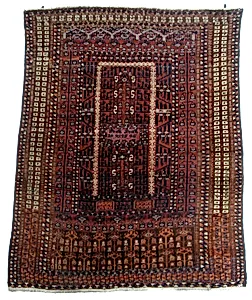
Tent Door Hanging
Unknown Artist
first half 19th century
Medium
Wool (warp, weft and pile), cotton (pile); symmetrically knotted pile
Dimensions
L. 72 in. (182.9 cm) W. 50 in. (137.2 cm)
Classification
Textiles-Rugs
Department
Islamic Art
Museum
Metropolitan Museum of Art, New York, NY
Credit
Rogers Fund, 1906
Accession Number
06.1023
Rights
Public Domain
Art Historical Context
This stunning *Tent Door Hanging* from first half of the 19th century offers a glimpse into the rich textile traditions of the Islamic world. Crafted as a functional yet beautifully decorative piece, it measures an impressive 72 by 50 inches, perfectly sized to drape over the entrance of a nomadic tent. Such hangings, often called "ensad" or door rugs, served both practical purposes—providing privacy and insulation—and aesthetic ones, welcoming guests with vibrant patterns symbolic of tribal identity and heritage. Woven with wool for the warp, weft, and pile, accented by cotton pile, the artwork employs the symmetrically knotted pile technique, a hallmark of fine Oriental rug making. This method, where knots are tied evenly on either side of the foundation, creates a dense, durable surface with intricate motifs that endure heavy use. Common in regions from Anatolia to Central Asia, it reflects the nomadic weavers' mastery of portable looms and natural dyes, blending utility with artistry. Acquired through the Rogers Fund in 1906 and now housed in the Metropolitan Museum of Art's Islamic Art Department, this anonymous masterpiece highlights the cultural importance of textiles in Islamic societies, where rugs were cherished heirlooms passed down generations. Visitors, imagine the stories woven into its threads!