
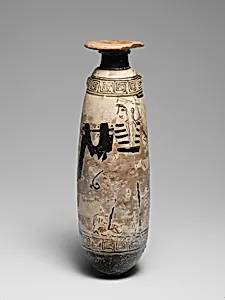
Terracotta alabastron (perfume vase)
ca. 510–500 BCE
Medium
Terracotta
Dimensions
H. 7 1/8 in. (18.1 cm)
Classification
Vases
Culture & Period
Greek, Attic · Archaic
Department
Greek and Roman Art
Museum
Metropolitan Museum of Art, New York, NY
Credit
Rogers Fund, 1922
Accession Number
22.139.27
Rights
Public Domain
Tags
Art Historical Context
This delicate terracotta alabastron a perfume vase from Attic Greece around 510–500 BCE, the Archaic period's blend of everyday utility and artistic flair.ed by the Group of the Paidikos Alabastra workshop known for small-scale vases—this 7 1/8-inch (18.1 cm) vessel designed to hold scented oils, prized in ancient Greek rituals, grooming, and funerary practices. Its pear-shaped form, typical of alabastra, allowed for easy pouring, reflecting the period's innovative pottery shapes. The vase's surface likely features vibrant black-figure decoration showcasing a dynamic hunting scene: archers with bows, pursuing panthers alongside loyal dogs. These motifs evoke the thrill of the hunt, a popular theme symbolizing youthful vigor and mastery over nature—perhaps alluding to mythological heroes or elite pastimes. The Group's style captures Archaic energy with incised details and added clay accents for animals' eyes and muscles, highlighting technical precision on such a miniature scale. Housed in the Metropolitan Museum of Art's Greek and Roman Art Department (Rogers Fund, 1922), this piece offers a window into Archaic Athens' vibrant culture, where pottery bridged domestic life and artistry. Visitors will appreciate its timeless allure, bridging the sensual world of ancient perfumes with timeless tales of pursuit and prowess.