
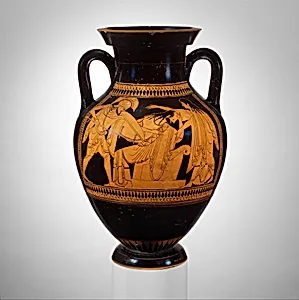
Terracotta amphora (jar)
ca. 500 BCE
Medium
Terracotta
Dimensions
18 1/16 × 11 3/4 in. (45.9 × 29.8 cm) Diam. of rim: 7 7/8 in. (20 cm) Diam. of foot: 5 7/8 in. (14.9 cm)
Classification
Vases
Culture & Period
Greek, Attic · Archaic
Department
Greek and Roman Art
Museum
Metropolitan Museum of Art, New York, NY
Credit
Rogers Fund, 1906
Accession Number
06.1021.99
Rights
Public Domain
Tags
Art Historical Context
This striking terracotta amphora, crafted around 500 BCE in Athens during Greece’s Archaic period, exemplifies the refined pottery tradition of Attic workshops. Standing about 18 inches tall, the vessel was designed for storing and transporting valuable liquids such as wine or oil. Its sturdy yet elegant form, with a wide mouth and stable foot, reflects both practical needs and the aesthetic sensibilities of the time. Attributed to the Nikoxenos Painter, the amphora bears decorative scenes featuring altars and spears, hinting at ritual or martial themes common in late Archaic imagery. As a signed work by a recognized artist, it highlights the growing individuality of vase painters who moved beyond anonymous production to create distinctive styles. The terracotta medium allowed for durable, finely painted surfaces that have preserved these narratives for over two millennia. Today in the Metropolitan Museum’s Greek and Roman collection, this piece offers visitors a tangible connection to ancient Greek daily life, trade, and religious practices. Its presence in the museum underscores the enduring cultural importance of Attic pottery as both functional object and sophisticated art form.