
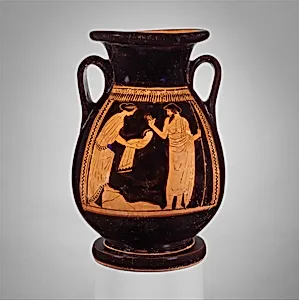
Terracotta pelike (jar)
ca. 460–450 BCE
Medium
Terracotta
Dimensions
13 11/16in. (34.8cm)
Classification
Vases
Culture & Period
Greek, Attic · Classical
Department
Greek and Roman Art
Museum
Metropolitan Museum of Art, New York, NY
Credit
Rogers Fund, 1906
Accession Number
06.1021.144
Rights
Public Domain
Tags
Art Historical Context
This elegant terracotta pelike, created around 460–450 BCE by the Nausicaä Painter, exemplifies the refined artistry of Classical Athens. A pelike is a two-handled jar typically used for storing wine, oil, or other liquids in daily life and ceremonial contexts. Standing just under 14 inches tall, its compact form made it both practical and portable, reflecting the innovative shapes Athenian potters developed during this period of artistic experimentation. The vessel belongs to the red-figure tradition, in which artists painted figures against the natural clay background, allowing greater detail in drapery and anatomy. The Nausicaä Painter, active in Attic workshops, was known for graceful compositions featuring men and women engaged in everyday or mythological scenes. Such imagery offers modern viewers glimpses into Greek social customs, gender roles, and ideals of beauty. Acquired by the Metropolitan Museum through the Rogers Fund in 1906, the pelike stands as a testament to the cultural importance of painted pottery in ancient Greece. These vases were not merely utilitarian but also served as vehicles for storytelling and artistic expression, bridging the worlds of craft and fine art.