
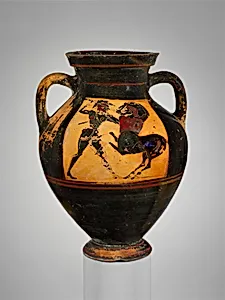
Terracotta amphora (jar)
Unknown Artist
ca. 560–550 BCE
Medium
Terracotta
Dimensions
H. 14 5/8 in. (37.2 cm.) Diameter 10 15/16 in. (27.8 cm.)
Classification
Vases
Culture & Period
Greek, Attic · Archaic
Department
Greek and Roman Art
Museum
Metropolitan Museum of Art, New York, NY
Credit
Rogers Fund, 1941
Accession Number
41.162.103
Rights
Public Domain
Tags
Art Historical Context
This elegant terracotta amphora, crafted by an unknown Attic Greek potter around 560–550 BCE during the Archaic period, as a prime example of black-figure vase painting. Measuring just over 14 inches tall, it was likely used to store olive oil or wine, essential commodities in ancient Greek life. Produced in Athens, the heart of Attic pottery production, such vessels were both functional household items and canvases for storytelling through art. The amphora's decoration centers on the heroic exploits of Herakles, Greece's most famous mythological strongman, locked in combat with ferocious centaurs—half-man, half-horse beasts symbolizing untamed chaos. This scene evokes epic tales like the Centauromachy, highlighting themes of civilization triumphing over barbarism, a core Greek cultural ideal. The black-figure technique, where orange clay figures were outlined in black slip and details incised with precision, allowed for dynamic compositions that captured motion and drama. Housed in the Metropolitan Museum of Art's Greek and Roman Art Department since 1941, this amphora offers a window into Archaic Greece's vibrant mythology and masterful craftsmanship, bridging everyday utility with timeless narratives of heroism.