
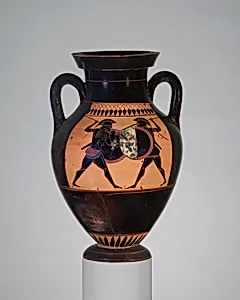
Terracotta amphora (jar)
ca. 530 BCE
Medium
Terracotta
Dimensions
H. 16 5/16 in. (41.5 cm) diameter of mouth 6 15/16 in. (17.7 cm) diameter of foot 5 7/16 in. (13.8 cm)
Classification
Vases
Culture & Period
Greek, Attic · Archaic
Department
Greek and Roman Art
Museum
Metropolitan Museum of Art, New York, NY
Credit
Fletcher Fund, 1956
Accession Number
56.171.14
Rights
Public Domain
Tags
Art Historical Context
This striking terracotta amphora, crafted around 530 BCE in Athens during Greece’s Archaic period, exemplifies the refined pottery traditions of Attic workshops. Standing just over 16 inches tall, the vessel was designed both for practical storage—likely holding wine or oil—and as a canvas for storytelling. Its elegant shape, with a wide mouth and sturdy foot, reflects the functional yet graceful forms favored by Greek artisans of the time. Attributed to the Lysippides Painter, the amphora features a vibrant mythological scene incorporating Dionysus, satyrs, and armed men with shields. Such imagery highlights the god of wine and revelry, whose presence on vessels often evoked themes of celebration, transformation, and the blurred line between civilization and wild nature. The black-figure technique, common in this era, allowed the artist to silhouette dynamic figures against the clay’s warm surface, creating lively narratives that would have delighted viewers at symposia or festivals. As a work now in the Metropolitan Museum’s Greek and Roman collection, this amphora offers modern visitors a tangible connection to ancient Athenian culture, where art, mythology, and daily life intertwined seamlessly.