
Terracotta amphora (jar)
ca. 540–530 BCE
Medium
Terracotta
Dimensions
H. 13 3/4 in. (35 cm)
Classification
Vases
Culture & Period
Etruscan · Archaic
Department
Greek and Roman Art
Museum
Metropolitan Museum of Art, New York, NY
Credit
Rogers Fund, 1948
Accession Number
48.11.6
Rights
Public Domain
Tags
Art Historical Context
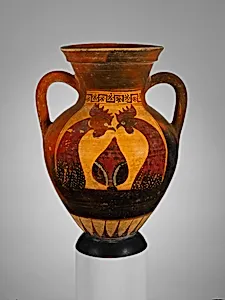
This elegant terracotta amphora, crafted by the Ivy Leaf Group around 540–530 BCE, exemplifies the vibrant artistry of Archaic Etruscan culture. Standing at 13 3/4 inches (35 cm) tall, this two-handled storage jar reflects the Etruscans' deep admiration for Greek pottery traditions, which they adapted with their own flair. Produced in workshops in central Italy, such vases were essential for everyday use—storing wine, oil, or grains—while serving as canvases for storytelling through decoration. The Ivy Leaf Group, named for their signature repeating ivy leaf motifs, was renowned for black-figure technique, where figures were painted in glossy black slip and incised to reveal red clay beneath, creating dynamic contrasts. Adorning this amphora are lively roosters, symbols of vigilance and fertility in ancient Mediterranean lore, often linked to deities like Ares or domestic life. The precise incising and added white details highlight the group's mastery, blending Greek influences like the Corinthian style with Etruscan boldness. Such vases bridged trade routes, carrying not just goods but cultural exchanges between Greece, Etruria, and beyond. Acquired through the Rogers Fund in 1948, this piece from the Metropolitan Museum of Art's Greek and Roman Art Department invites us to ponder the daily rhythms of Etruscan society—feasts, rituals, and the rooster's dawn call echoing through bustling households over 2,500 years ago.