
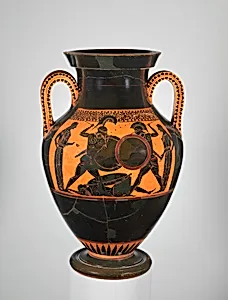
Terracotta amphora (jar)
ca. 520–510 BCE
Medium
Terracotta
Dimensions
H. 20 15/16 in. (53.2 cm)
Classification
Vases
Culture & Period
Greek, Attic · Archaic
Department
Greek and Roman Art
Museum
Metropolitan Museum of Art, New York, NY
Credit
Gift of Colonel and Mrs. Lewis Landes, 1958
Accession Number
58.32
Rights
Public Domain
Art Historical Context
Behold the elegant Terracotta amphora by the Lysippides Painter a masterful Attic Greek vase from around 520–510 BCE, at an impressive 20 15/16 inches (53.2 cm) tall. Crafted during the Archaic period, this two-handled jar exemplifies the pinnacle of black-figure pottery technique, where artisans painted silhouettes in glossy black slip on fired clay, incising fine details to reveal the red terracotta beneath. The Lysippides Painter, after a signature on a related vase, was among the last great exponents of this style before the revolutionary shift to red-figure painting. Amphorae like this were everyday luxuries in ancient Athens—used to store and transport olive oil or wine for symposia, trade, and rituals. Attic vases were prized exports, spreading Greek myths and daily life across the Mediterranean, making this piece a cultural ambassador of Archaic Greece. Housed in the Metropolitan Museum of Art's Greek and Roman Art Department since a generous 1958 gift from Colonel and Mrs. Lewis Landes, it invites us to marvel at the potters' precision and painters' storytelling flair. (198 words)