
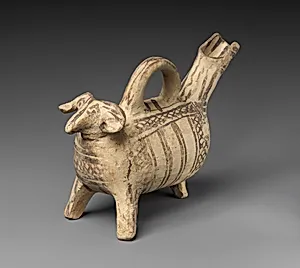
Terracotta askos (vessel)
Unknown Artist
ca. 1900–1600 BCE
Medium
Terracotta
Dimensions
H. 6 3/8 in. (16.2 cm)
Classification
Vases
Culture & Period
Cypriot · Middle Cypriot
Department
Greek and Roman Art
Museum
Metropolitan Museum of Art, New York, NY
Credit
The Cesnola Collection, Purchased by subscription, 1874–76
Accession Number
74.51.793
Rights
Public Domain
Art Historical Context
This delicate terracotta askos, to Cyprus's Middle Cypriot period (ca. 1900–1600 BCE), is a fine example of Bronze Age pottery from an island culture at the crossroads of the ancient Mediterranean. Standing just 6⅜ inches (16.2 cm) tall, its compact, bag-like form with a spout typifies the askos—a practical vessel designed for pouring liquids like oil, perfume, or wine with precision and minimal waste. Crafted from fired clay, terracotta was prized for its durability and versatility, allowing Cypriot potters to create everyday objects that doubled as cultural touchstones. Though the artist remains unknown, the vessel reflects the Middle Cypriot emphasis on functional simplicity, often hand-built or wheel-thrown without elaborate decoration. These wares highlight Cyprus's role as a thriving hub of trade and innovation, influencing and drawing from neighboring Minoan and Near Eastern traditions. Now part of The Cesnola Collection at The Metropolitan Museum of Art—acquired by subscription in 1874–76—this askos offers visitors a tangible link to prehistoric life, evoking the ingenuity of a people whose ceramics bridged domestic rituals and regional exchange.