
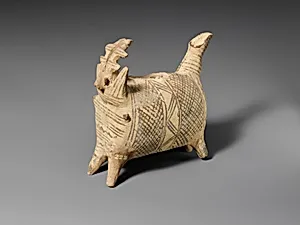
Terracotta zoomorphic askos (vessel)
Unknown Artist
1900–1600 BCE
Medium
Terracotta
Dimensions
H. 5 1/2 in. (14 cm)
Classification
Vases
Culture & Period
Cypriot · Middle Cypriot
Department
Greek and Roman Art
Museum
Metropolitan Museum of Art, New York, NY
Credit
The Cesnola Collection, Purchased by subscription, 1874–76
Accession Number
74.51.796
Rights
Public Domain
Tags
Art Historical Context
This charming terracotta zoomorphic ask, dating to the Middle Cypriot period (1900–1600 BCE), hails from ancient Cyprus, a vibrant Mediterranean island culture bridging Near Eastern and Aegean influences during the Bronze Age. Standing just 5½ inches (14 cm) tall, small vessel belongs to the Cesnola Collection at The Metropolitan Museum of Art, through public subscription in 187476. As a vase classified in the Greek and Roman Art department, it exemplifies Cypriot pottery traditions, where everyday objects blended functionality with playful artistry. Shaped like an animal—likely a quadruped such as a bull or goat, common in zoomorphic forms—the askos features a distinctive spout for pouring oils, wines, or perfumes, with a handle and often a trefoil mouth for controlled flow. Crafted from fired clay, it reflects skilled terracotta techniques: hand-coiled or wheel-thrown construction, smoothed surfaces, and possibly simple burnishing for durability and sheen. These vessels were essential in households and rituals, highlighting Cyprus's role as a trade hub. Its cultural significance lies in revealing Middle Cypriot society's affinity for nature-inspired designs, infusing mundane tools with life-like whimsy. Though the artist remains unknown, such pieces underscore the period's innovative pottery, bridging utility and symbolism in a thriving Bronze Age world.