
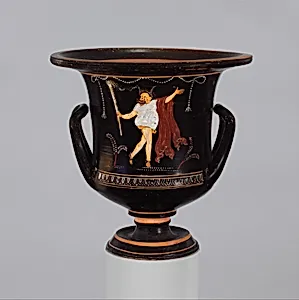
Terracotta calyx-krater (mixing bowl)
ca. 350–325 BCE
Medium
Terracotta
Dimensions
H. 12 1/2 in. (31.8 cm)
Classification
Vases
Culture & Period
Greek, South Italian, Apulian, Gnathian · Late Classical
Department
Greek and Roman Art
Museum
Metropolitan Museum of Art, New York, NY
Credit
Rogers Fund, 1951
Accession Number
51.11.2
Rights
Public Domain
Tags
Art Historical Context
This terracotta calyx-krater presents a glossy black surface decorated with added colors in white, yellow, and red. male figure stands in a lively pose at the center, wearing a short white tunic and a flowing reddish-brown cloak that billows behind him. He holds a staff in one hand while raising the other, his legs positioned as if in mid-step, surrounded by delicate dotted garlands and small floral motifs that accent the composition. Created in South Italy around 350–325 BCE, this mixing bowl belongs to the Konnakis Group of Apulian Gnathian ware. The style is characteristic of Late Classical Greek pottery from the region, where painters applied bright pigments over a black-glazed ground to depict scenes from daily life and theater. Such vessels were used for mixing wine and water at banquets, and the actor shown here reflects the popularity of dramatic performances in ancient Apulia. Now in the collection of The Metropolitan Museum of Art, the krater offers a vivid glimpse into the artistic traditions of Greek South Italy.