
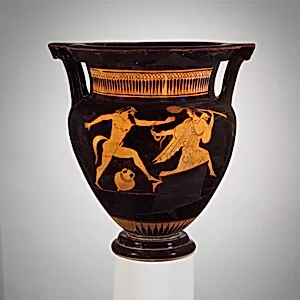
Terracotta column-krater (bowl for mixing wine and water)
ca. 475–465 BCE
Medium
Terracotta
Dimensions
H. 17 in. (43.2 cm) diameter 13 11/16 in. (34.7 cm)
Classification
Vases
Culture & Period
Greek, Attic · Classical
Department
Greek and Roman Art
Museum
Metropolitan Museum of Art, New York, NY
Credit
Rogers Fund, 1906
Accession Number
06.1021.152
Rights
Public Domain
Tags
Art Historical Context
Step into the lively world of ancient Athens with this striking terracotta column-krater the Pig Painter, dating to around 475–465 BCE. Crafted in Attic Greece during the Classical period, vase—standing 17 inches tall with a 13 11/16-inch diameter—was centerpiece of symposia, elite drinking parties where wine was mixed with water. Its elegant column-shaped handles and wide bowl made it both functional and a canvas for storytelling, exemplifying the red-figure technique where figures emerge in the natural red clay against a glossy black background. The krater vividly captures Dionysian revelry through depictions of Maenads—ecstatic female followers of the wine god Dionysus—and playful Satyrs, half-human, half-beast companions known for their wild antics. These mythological scenes reflect the Greeks' fascination with ritual ecstasy, music, and dance, blending everyday social life with divine mythology. The Pig Painter, named for his quirky pig motifs in other works, showcases masterful line work and dynamic poses that bring these figures to life. Housed in the Metropolitan Museum of Art's Greek and Roman Art Department (acquired via Rogers Fund in 1906), this vase highlights the pinnacle of Attic pottery innovation. It offers a window into Classical Greek culture, where art served both utility and celebration, inviting us to imagine the laughter and libations of 2,500 years ago.