
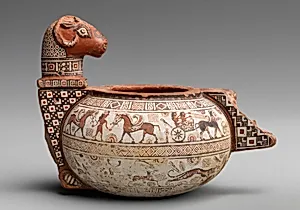
Terracotta cosmetic vase
Unknown Artist
4th quarter of the 6th century BCE
Medium
Terracotta
Dimensions
Overall: 3 7/8 x 5 3/16 in. (9.8 x 13.2 cm) diameter 3 13/16in. (9.8cm)
Classification
Vases
Culture & Period
East Greek · Archaic
Department
Greek and Roman Art
Museum
Metropolitan Museum of Art, New York, NY
Credit
The Bothmer Purchase Fund, 1977
Accession Number
1977.11.3
Rights
Public Domain
Tags
Art Historical Context
This terracotta cosmetic vase, dating to the late 6th century BCE, is a small yet evocative example of East Greek pottery from the Archaic period. Made by an unknown artist, the vessel measures just under 10 cm in height and was likely used to hold perfumed oils or other personal grooming products, highlighting the role of beauty and daily rituals in ancient Greek life. Its surface features a rich array of motifs including sphinxes, lions, horses, rams, birds, and chariots—imagery typical of East Greek workshops that blended local traditions with Near Eastern influences. Such decorations transformed a practical object into a narrative piece, reflecting the era’s interest in mythology, animals, and processional scenes. Today, this vase offers museum visitors a tangible connection to Archaic material culture, showing how even modest terracotta items combined utility with artistic expression and cultural exchange across the eastern Mediterranean.