
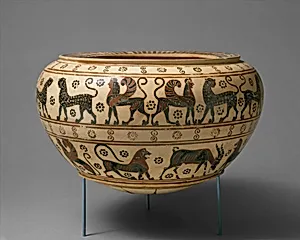
Terracotta dinos (mixing bowl)
ca. 630–615 BCE
Medium
Terracotta
Dimensions
H. 7 1/4 in. (18.4 cm); diameter 12 in. (30.5 cm)
Classification
Vases
Culture & Period
Greek, Corinthian · Transitional
Department
Greek and Roman Art
Museum
Metropolitan Museum of Art, New York, NY
Credit
The Bothmer Purchase Fund and Louis V. Bell Fund, 1997
Accession Number
1997.36
Rights
Public Domain
Tags
Art Historical Context
This elegant terracotta dinos, mixing bowl, crafted by the Polyteleia Painter around630–615 BCE, Corinthian pottery from the Transitional period. Hailing from ancient Greece's vibrant Corinthian culture, this wide-mouthed vessel—standing 7¼ inches tall with a 12-inch diameter—was designed for blending wine and water during symposia or rituals, a cornerstone of social life. Its simple, footless form highlights the practical yet artistic ingenuity of Corinthian potters, who dominated the Greek vase market in the 7th century BCE. Adorned with dynamic friezes of a mythical Sphinx, goats, and lions, the dinos bursts with Orientalizing motifs inspired by Near Eastern art. The Polyteleia Painter, known for his lively animal scenes, employed early black-figure techniques: incised outlines filled with glossy black slip over a clay ground, creating vivid contrasts and a sense of movement. These fierce creatures symbolize power and the wild, blending fantasy with the natural world in a style bridging Geometric austerity and Archaic exuberance. As a rare work by this painter, now at the Metropolitan Museum of Art, it offers a window into Corinth's export-driven workshops and evolving artistic tastes, underscoring the city's role in spreading Greek imagery across the Mediterranean.