
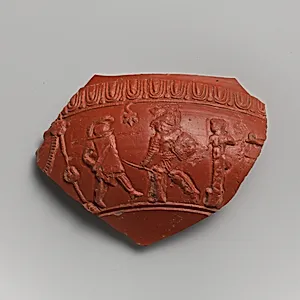
Terracotta fragment of a bowl
Unknown Artist
mid-2nd century CE
Medium
Terracotta
Dimensions
H. 5 5/16 in. (13.5 cm)
Classification
Vases
Culture & Period
Roman · Mid-Imperial, Antonine
Department
Greek and Roman Art
Museum
Metropolitan Museum of Art, New York, NY
Credit
Funds from various donors, 1929
Accession Number
29.158.494
Rights
Public Domain
Tags
Art Historical Context
This terracotta fragment from a bowl, dating to the mid-2nd century CE during Rome's Mid-Imperial Antonine period offers a glimpse into everyday Roman artistry. Standing just 5 5/16 inches (13.5 cm) high, it survives as a piece of a larger vase-like vessel, crafted from fired clay—a common, durable medium for household wares. Acquired by the Metropolitan Museum of Art in1929 through donor funds, it resides in the Greek and Roman department, highlighting the empire's blend of utility and decoration. The fragment likely features molded reliefs depicting battles and soldiers, motifs that celebrated Rome's military prowess. This era, under emperors like Antoninus Pius and Marcus Aurelius, saw ongoing campaigns along the frontiers, from Britain to the Danube. Such scenes on tableware reflected imperial pride, making heroic narratives accessible in domestic settings—imagine Roman diners toasting victories over a meal. Artistically, terracotta reliefs like this showcase skilled molding techniques, where wet clay was pressed into molds for intricate details before firing. Though incomplete, the fragment underscores how Roman potters democratized grand themes from monumental sculpture, bridging elite propaganda with daily life. A humble survivor, it invites us to ponder the lives of those who handled it amid the empire's golden yet turbulent age.