
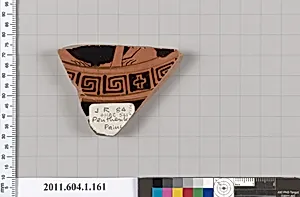
Terracotta fragment of a kylix (drinking cup)
470–450 BCE
Medium
Terracotta
Classification
Vases
Culture & Period
Greek, Attic · Classical
Department
Greek and Roman Art
Museum
Metropolitan Museum of Art, New York, NY
Credit
Gift of Dietrich von Bothmer, Distinguished Research Curator, Greek and Roman Art, 2011
Accession Number
2011.604.1.161
Rights
Public Domain
Art Historical Context
This exquisite terracotta fragment from a kylix, or shallow drinking cup, hails from the hands of the Penthesilea, a master of Attic red-figure pottery active 470–450 BCE Greece's Classical period. Named after a famous kylix depicting Achilles slaying the Amazon queen Pentilea, this artist bridged the Archaic and Classical styles, dynamic compositions and expressive figures that hinted at emerging naturalism in Greek art. Kylikes like this were staples of the symposion, elite male drinking parties where revelry, philosophy, and politics mingled. The red-figure technique—where artists painted black gloss slip around reserved red clay figures, then incised details—allowed for intricate storytelling and anatomical precision, showcasing the Penthesilea Painter's skill in capturing motion and emotion. Though only a fragment survives, it exemplifies Attic vase-painting's cultural zenith, exported across the Mediterranean and influencing everyday rituals from Athens to Etruria. A generous gift to the Metropolitan Museum of Art from Dietrich von Bothmer in 2011, this piece invites us to imagine the full vessel's vibrant myths, offering a tangible link to ancient Greece's sophisticated world.