
Terracotta fragment of a kylix (drinking cup)
470–460 BCE
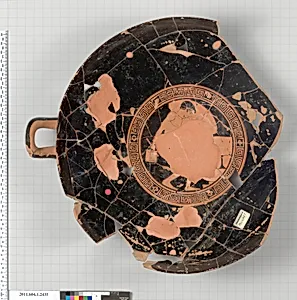
Medium
Terracotta
Classification
Vases
Culture & Period
Greek, Attic · Classical
Department
Greek and Roman Art
Museum
Metropolitan Museum of Art, New York, NY
Credit
Gift of Dietrich von Bothmer, Distinguished Research Curator, Greek and Roman Art, 2011
Accession Number
2011.604.1.2435
Rights
Public Domain
Art Historical Context
Step into the vibrant world of ancient Athens with this terracotta fragment from a kylix, a shallow drinking cup favored at symposia—lively social gatherings of elite Greek men. Crafted by the Tarquinia Painter around 470–460 BCE, during the High Classical period, Attic Greek artifact captures the refined elegance of red pottery. In this technique, artists painted figures in the natural red clay color and outlined details in black slip, fired in a kiln to create a glossy black background that made intricate scenes pop. The Tarquinia Painter, named after a group of his vases found in the Etruscan city of Tarquinia, Italy, was a master of dynamic compositions, often depicting mythological heroes, athletes, or daily life with graceful anatomy and expressive poses. Though only a fragment survives, it exemplifies the technical innovation of red-figure ware, which succeeded black-figure styles and allowed for greater realism and narrative depth—key to Athens' golden age of art and democracy. Generously gifted to the Metropolitan Museum of Art in 2011 by Dietrich von Bothmer, this piece offers a tangible link to Classical Greece's cultural zenith, where such kylikes weren't just vessels but storytelling canvases, blending utility with artistry in everyday rituals.
About the Artist
Tarquinia Painter
The Tarquinia Painter was an ancient Athenian vase painter working in the red-figure technique during the early Classical period, specifically around 470-460 BCE. Like most ancient Greek vase painters, this artist never signed their work, and their artistic identity has been reconstructed by modern scholars, particularly John Beazley, through careful stylistic analysis of unsigned pottery. The pai...