
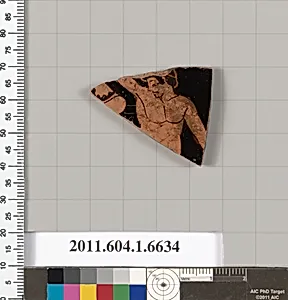
Terracotta fragment of a kylix (drinking cup)
490–470 BCE
Medium
Terracotta
Classification
Vases
Culture & Period
Greek, Attic · Late Archaic/Early Classical
Department
Greek and Roman Art
Museum
Metropolitan Museum of Art, New York, NY
Credit
Gift of Dietrich von Bothmer, Distinguished Research Curator, Greek and Roman Art, 2011
Accession Number
2011.604.1.6634
Rights
Public Domain
Art Historical Context
This exquisite terracotta fragment from a kylix, or shallow drinking cup, dates to 490–470 BCE and hails from the workshop of the Brygos Painter one of ancient Athens' most dynamic red-figure vase painters. Active during the Late Archaic to Early Classical transition, thegos Painter was renowned for his lively, figures—often warriors, revelers, or mythological scenes—rendered with fluid lines and a sense of movement that bridged the rigid Archaic style and the emerging Classical grace. Kylixes like this were central to the Greek symposium, elite male drinking parties where poetry, philosophy, and socializing flourished. Painted in the red-figure technique—where background clay was fired black, leaving figures in vibrant orange terracotta—these vessels showcased the painter's mastery of anatomy and narrative detail. Though only a fragment survives, it offers a tantalizing glimpse into Attic daily life and artistry, preserved through the generosity of Dietrich von Bothmer and now housed in the Metropolitan Museum of Art's Greek and Roman Art Department. Such pieces highlight the cultural pinnacle of Athenian pottery export, influencing art across the Mediterranean and embodying the era's shift toward naturalism and humanism.
About the Artist
Brygos Painter
The Brygos Painter is one of the most gifted and prolific red-figure vase painters of ancient Athens, active in the early fifth century BCE during one of the most dynamic periods of Greek artistic development. Like most ancient Greek vase painters, he is known to us not by his personal name but by a conventional scholarly designation — in this case derived from the potter Brygos, whose name appear...