
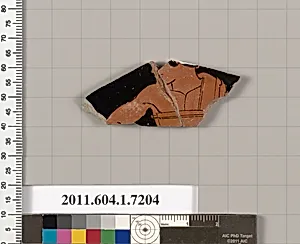
Terracotta fragment of a kylix (drinking cup)
500–480 BCE
Medium
Terracotta
Classification
Vases
Culture & Period
Greek, Attic · Archaic
Department
Greek and Roman Art
Museum
Metropolitan Museum of Art, New York, NY
Credit
Gift of Dietrich von Bothmer, Distinguished Research Curator, Greek and Roman Art, 2011
Accession Number
2011.604.1.7204
Rights
Public Domain
Art Historical Context
This exquisite terracotta fragment from a kylix, or drinking cup, crafted by renowned Attic vase-p Makron around 500480 BCE, offers a glimpse into the vibrant of Archaic Greek pottery. Makron, active during the late Archaic period, was a master of red-figure technique, where figures were outlined in black slip and details incised or painted, allowing the natural clay color to represent skin tones. Kylikes like this were essential for symposia—elegant male drinking parties—where they facilitated communal toasts and philosophical discourse. Hailing from Attica, the heart of classical Athens, this piece reflects the height of Greek ceramic innovation, blending functionality with artistry. Though only a fragment survives, it exemplifies the period's shift toward more naturalistic forms and dynamic compositions, bridging Archaic rigidity and emerging Classical grace. Attic vases were prized exports, spreading Greek myths and daily life across the Mediterranean. Generously gifted to the Metropolitan Museum of Art in 2011 by Dietrich von Bothmer, this artifact invites us to ponder the symposiasts who once held it, their laughter echoing through ancient halls. A testament to enduring craftsmanship, it underscores pottery's role as both everyday object and cultural ambassador.
About the Artist
Makron
Makron stands as one of the most prolific masters of Attic red-figure vase painting, active in Athens around 490–480 BC during the late Archaic to early Classical transition.) Little is known of his early life or formal training, as such details remain undocumented for many ancient potters and painters of this era. Exclusively employing the red-figure technique—which allowed for intricate detailin...