
Terracotta fragment of a kylix (drinking cup)
500–480 BCE
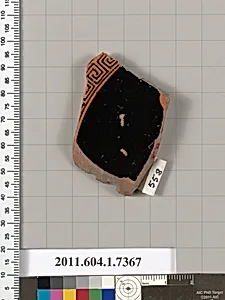
Medium
Terracotta
Classification
Vases
Culture & Period
Greek, Attic · Archaic
Department
Greek and Roman Art
Museum
Metropolitan Museum of Art, New York, NY
Credit
Gift of Dietrich von Bothmer, Distinguished Research Curator, Greek and Roman Art, 2011
Accession Number
2011.604.1.7367
Rights
Public Domain
Art Historical Context
This exquisite terracotta fragment from a kylix, or shallow drinking cup, dates to 500–480 BCE and hails from Attic Greece during the late Archaic period Crafted by the renowned vase-painter Makron, one of the most prolific artists of his time, it exemplifies the red-figure technique that revolutionized Greek pottery. In this method, figures were painted in the natural red clay color against a black-gloss background, allowing intricate details in anatomy, drapery, and expressions—Makron's specialty, often seen in lively symposion scenes of revelry and myth. Kylikes like this were essential to ancient Greek social life, used in the male drinking parties known as symposia, where they symbolized refinement and intellectual exchange. Though only a fragment survives, it offers a glimpse into Makron's mastery, likely depicting dynamic figures from mythology or daily life, showcasing the transition from rigid Archaic forms to the more fluid early Classical style. Donated to the Metropolitan Museum of Art in 2011 by Dietrich von Bothmer, this piece highlights the enduring allure of Attic ceramics, bridging art and ancient ritual. (178 words)
About the Artist
Makron
Makron stands as one of the most prolific masters of Attic red-figure vase painting, active in Athens around 490–480 BC during the late Archaic to early Classical transition.) Little is known of his early life or formal training, as such details remain undocumented for many ancient potters and painters of this era. Exclusively employing the red-figure technique—which allowed for intricate detailin...