
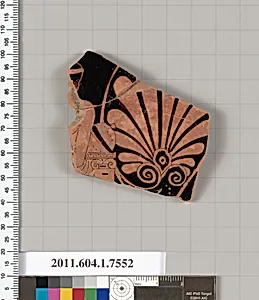
Terracotta fragment of a kylix (drinking cup)
460–450 BCE
Medium
Terracotta
Classification
Vases
Culture & Period
Greek, Attic · Classical
Department
Greek and Roman Art
Museum
Metropolitan Museum of Art, New York, NY
Credit
Gift of Dietrich von Bothmer, Distinguished Research Curator, Greek and Roman Art, 2011
Accession Number
2011.604.1.7552
Rights
Public Domain
Art Historical Context
This terracotta fragment comes from a kylix, a shallow drinking cup central to ancient Greek social life. Created in Athens between 460 and 450 BCE during the Classical period, such vessels were used at symposia—male gatherings where wine, conversation, and poetry flowed. The Euaion Painter, whose name appears on several surviving works, belonged to the generation of Attic artists who refined red-figure techniques, allowing greater naturalism and expressive detail than earlier black-figure styles. Made of fired terracotta, the kylix exemplifies the everyday yet sophisticated artistry of Greek pottery. Even in its fragmentary state, the piece reflects the high standards of Athenian workshops, where painters balanced functional design with delicate figural scenes. These cups were both practical objects and carriers of cultural values, often illustrating myths or daily activities that connected users to shared stories and ideals. Today, this fragment resides in the Metropolitan Museum of Art’s Greek and Roman Art department, a gift from curator Dietrich von Bothmer. It offers visitors a tangible link to the artistic and social world of fifth-century Athens, reminding us how humble materials could embody refined aesthetic and communal traditions.
About the Artist
Euaion Painter
**The Euaion Painter** was an ancient Greek Attic vase painter active in Athens from approximately 460 to 440 BCE. Like most vase painters of the period, his true name remains unknown; scholars named him after the inscription “Euaion kalos” (“Euaion the fair”) that appears on one of his works now in the Louvre. This Euaion was the son of the tragedian Aeschylus and a favorite subject of contempora...