
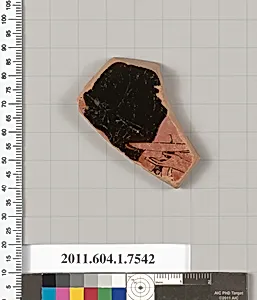
Terracotta fragment of a kylix (drinking cup)
460–450 BCE
Medium
Terracotta
Classification
Vases
Culture & Period
Greek, Attic · Classical
Department
Greek and Roman Art
Museum
Metropolitan Museum of Art, New York, NY
Credit
Gift of Dietrich von Bothmer, Distinguished Research Curator, Greek and Roman Art, 2011
Accession Number
2011.604.1.7542
Rights
Public Domain
Art Historical Context
This terracotta fragment comes from a kylix, the shallow drinking cup central to social rituals in ancient Athens. Created between 460 and 450 BCE during the Classical period, it belongs to the vibrant tradition of Attic pottery, where vessels served both practical and artistic purposes atposia—gatherings blended conversation, wine, and cultural exchange. Attributed to the Euaion Painter, the fragment reflects the refined techniques of Greek vase painters who worked in the red-figure method, allowing for greater detail and naturalism in human figures. Such works highlight the high regard for pottery as an accessible art form that reached households across the Mediterranean. Today housed in the Metropolitan Museum of Art, this piece offers visitors a tangible connection to Athenian daily life and artistic innovation five centuries before the Common Era. Its survival as a fragment reminds us how even partial remains illuminate the elegance and skill of Classical Greek craftsmanship.
About the Artist
Euaion Painter
**The Euaion Painter** was an ancient Greek Attic vase painter active in Athens from approximately 460 to 440 BCE. Like most vase painters of the period, his true name remains unknown; scholars named him after the inscription “Euaion kalos” (“Euaion the fair”) that appears on one of his works now in the Louvre. This Euaion was the son of the tragedian Aeschylus and a favorite subject of contempora...