
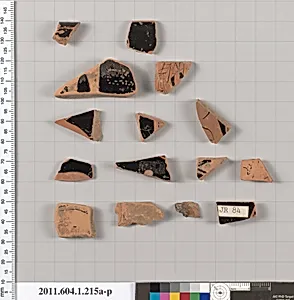
Terracotta fragments of a kylix (drinking cup)
Unknown Artist
second quarter of the 5th century BCE
Medium
Terracotta
Classification
Vases
Culture & Period
Greek, Attic · Classical
Department
Greek and Roman Art
Museum
Metropolitan Museum of Art, New York, NY
Credit
Gift of Dietrich von Bothmer, Distinguished Research Curator, Greek and Roman Art, 2011
Accession Number
2011.604.1.215a–p
Rights
Public Domain
Art Historical Context
These terracotta fragments from a kylix, or shallow drinking cup, hail from Attic Greece in the second quarter of the5th century BCE, the height of the Classical period. Crafted in the vibrant hub of ancient Athens, this vessel exemplifies the exquisite pottery tradition that defined Greek artistry. Kylikes were essential for symposia—lively social gatherings where elites reclined, drank wine mixed with water, and engaged in philosophical discourse, poetry, and games. Though incomplete, these shards offer a glimpse into everyday luxury and ritual life in democratic Athens, around the time of the Parthenon's construction. Attic potters mastered terracotta techniques, firing clay at high temperatures for durability and then decorating with the revolutionary red-figure style, where figures were outlined in black slip, leaving the clay's natural red hue to shine through. This innovation allowed for intricate details in anatomy, drapery, and motion, influencing art across the Mediterranean. Gifted to the Metropolitan Museum of Art in 2011 by renowned curator Dietrich von Bothmer, these fragments highlight the ongoing quest to reconstruct ancient narratives from broken beauties, underscoring pottery's role as a window into Classical Greek culture's sophistication and democratic spirit.