
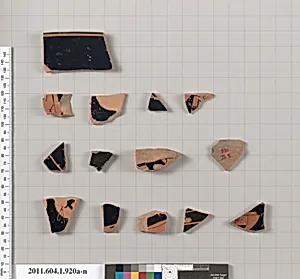
Terracotta fragments of kylikes (drinking cups)
Unknown Artist
5th century BCE
Medium
Terracotta
Classification
Vases
Culture & Period
Greek, Attic · Archaic/Classical
Department
Greek and Roman Art
Museum
Metropolitan Museum of Art, New York, NY
Credit
Gift of Dietrich von Bothmer, Distinguished Research Curator, Greek and Roman Art, 2011
Accession Number
2011.604.1.920a–n
Rights
Public Domain
Art Historical Context
These terracotta fragments from kylikes—shallow, stemmed drinking cups—offer a glimpse into everyday life in ancient Attic Greece during the5th century BCE, pivotal time bridging the Archaic and Classical periods. Produced in Athens, the heart of Greek pottery innovation, kylikes were essential for symposia, the intellectual and social drinking parties where philosophers, poets, and elites gathered. Though incomplete, these pieces exemplify the wheel-thrown terracotta technique, fired in kilns to create durable, reddish clay vessels often adorned with painted scenes from mythology, daily life, or athletic pursuits. Attic vases like these hold immense artistic and cultural significance, representing the pinnacle of Greek ceramic artistry. Potters and painters collaborated to master black-figure and emerging red-figure styles, using mineral pigments and precise incisions to bring narratives to life. Even as fragments, they provide invaluable insights for scholars studying trade, workshops, and evolving tastes in Classical Greece. Generously gifted to the Metropolitan Museum of Art in 2011 by Dietrich von Bothmer, a renowned curator of Greek and Roman art, these shards preserve the legacy of anonymous Attic craftsmen whose work influenced the Mediterranean world. A reminder that beauty endures in pieces both grand and broken.