
Terracotta funerary plaque
Unknown Artist
ca. 520–510 BCE
Medium
Terracotta
Dimensions
Overall: 10 1/4 x 14 1/4 x 3/8 in. (26 x 36.2 x 0.9 cm)
Classification
Terracottas
Culture & Period
Greek, Attic · Archaic
Department
Greek and Roman Art
Museum
Metropolitan Museum of Art, New York, NY
Credit
Rogers Fund, 1954
Accession Number
54.11.5
Rights
Public Domain
Tags
Art Historical Context
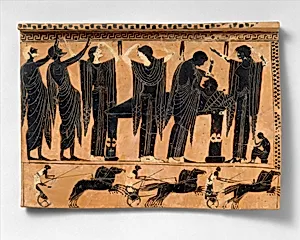
This exquisite terracotta funerary plaque crafted by an unknown Attic Greek artist 520–510 BCE, offers a poignant glimpse into Archaic Greek mourning rituals. Measuring just over 10 by 14 inches, it depicts a funeral procession, or *ekphora*, featuring, women, horses, chariots—common motifs symbolizing status and the journey to the afterlife. Placed on or near tombs in ancient Athens, such plaques served as memorials, blending artistry with reverence for the deceased. Terracotta, fired clay abundant in Attica, was an ideal medium for these low-relief sculptures, allowing artisans to mold detailed scenes with incised lines and subtle modeling. This Archaic work reflects the period's stylistic hallmarks: rigid yet expressive figures with patterned drapery and a focus on narrative clarity, bridging the Geometric and Classical eras. Though often unpainted today, traces suggest original pigmentation heightened emotional impact. Culturally, the plaque illuminates Athenian elite funerals, where chariots evoked heroic epics like the Iliad, underscoring social hierarchies and communal grief. Acquired by The Metropolitan Museum of Art via the Rogers Fund in 1954, it invites us to reflect on timeless human rituals of loss and legacy.