
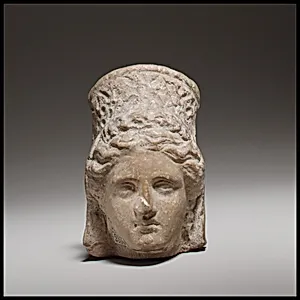
Terracotta head of a goddess
Unknown Artist
3rd century BCE
Medium
Terracotta
Dimensions
H. 2 3/4 in. (7 cm)
Classification
Terracottas
Culture & Period
Greek, Cypriot · Early Hellenistic
Department
Greek and Roman Art
Museum
Metropolitan Museum of Art, New York, NY
Credit
The Cesnola Collection, Purchased by subscription, 1874–76
Accession Number
74.51.1533
Rights
Public Domain
Tags
Art Historical Context
This delicate terracotta head of a, crafted in the Early Hellenistic period around the 3rd century BCE, hails from ancient Cyprus, a vibrant crossroads of Greek and Eastern Mediterranean cultures. Standing just 2 3/4 inches (7 cm) tall, it exemplifies the intimate scale of votive figurines at sanctuaries to honor deities. Likely depicting a goddess such as Aphrodite—whose cult thrived on Cyprus—the serene facial features and elaborate headdress reflect the refined idealism of Hellenistic art, blending classical Greek harmony with local Cypriot flair. Terracotta, a fired clay medium, was prized for its affordability and portability, allowing widespread production of such devotional objects. Artisans molded the clay by hand or in simple molds, then fired it to achieve durability, often adding painted details now faded by time. These small sculptures served as personal expressions of faith, bridging the mortal and divine in everyday worship. Acquired through The Cesnola Collection and now housed in the Metropolitan Museum of Art's Greek and Roman Art department, this piece offers a window into Cypriot religious life, reminding us how ancient devotees connected with the gods through humble yet heartfelt artistry.