
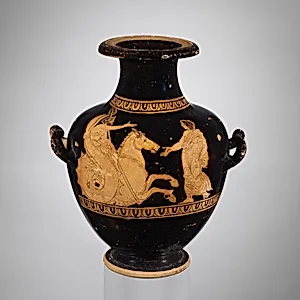
Terracotta hydria: kalpis (water jar)
Unknown Artist
1st quarter of the 4th century BCE
Medium
Terracotta
Dimensions
H. 7 3/4 in. (19.7 cm); diameter 5 7/16 in. (13.9 cm)
Classification
Vases
Culture & Period
Greek, Attic · Classical
Department
Greek and Roman Art
Museum
Metropolitan Museum of Art, New York, NY
Credit
Rogers Fund, 1921
Accession Number
21.88.162
Rights
Public Domain
Tags
Art Historical Context
This elegant terracotta hydria, or kalpis—a type of water jar with a rounded base for easy pouring—was crafted in Attic Greece during the first quarter of the 4th century BCE, in the heart of the Classical period. Standing just 7 3/4 inches tall, it exemplifies the everyday functional pottery that filled ancient Greek households, used to fetch and store water from public fountains. Produced in Athens, the epicenter of red-figure vase painting, such vessels blended utility with artistry, transforming mundane objects into storytelling canvases. The jar's decoration, featuring Poseidon amid seahorses and men, evokes the god of the sea's mythical domain. Seahorses, his divine steeds, pull chariots through ocean waves, while human figures likely depict attendants or heroes in a dynamic seascape. This imagery reflects Classical Greek fascination with mythology, where gods interacted with mortals, underscoring cultural values of harmony between human life and divine forces. The black-glaze or painted details highlight the period's refined techniques, with fluid lines capturing movement on a compact scale. Acquired by The Metropolitan Museum of Art through the Rogers Fund in 1921, this hydria offers a window into Attic craftsmanship, reminding us how ancient artisans elevated daily rituals into timeless art.