
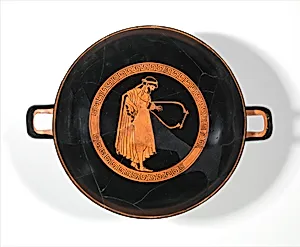
Terracotta kylix (drinking cup)
ca. 480 BCE
Medium
Terracotta
Dimensions
H.: 3 13/16 in. (9.7 cm) Diam.: 9 3/8 in. (23.8 cm)
Classification
Vases
Culture & Period
Greek, Attic · Classical
Department
Greek and Roman Art
Museum
Metropolitan Museum of Art, New York, NY
Credit
Rogers Fund, 1906
Accession Number
06.1021.188
Rights
Public Domain
Tags
Art Historical Context
This elegant terracotta kylix, by the Dokimasia Painter around 480 BCE, exemplifies Attic red-figure pottery from the early Classical period of ancient Greece. Measuring just under 4 inches tall and nearly 10 inches in diameter, this shallow drinking cup was designed for symposialively social gatherings where elite Athenian men reclined, drank wine, and enjoyed music and conversation. The Rogers Fund acquisition 1906 brought this gem to the Metropolitan Museum of Art Greek and Roman Art departmentThe Dokimasia Painter, active in Athens during a golden age of vase painting, masterfully employed the red-figure technique: figures reserved in the natural reddish clay color against a glossy black background, painted with fine details using slip. Here, the scenes likely feature men with lyres, evoking the cultural reverence for music and poetry in Greek society—lyres were symbols of Apollo and education. Incised lines and dilute slip add subtle shading, highlighting the artist's skill in capturing movement and harmony. As a snapshot of daily elite life, this kylix reveals the Greeks' blend of artistry and ritual, where vessels like this doubled as canvases for storytelling. Its survival underscores the durability of terracotta and our enduring fascination with Classical ideals of beauty and balance.