
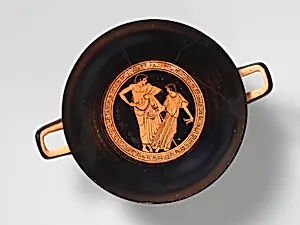
Terracotta kylix (drinking cup)
ca. 490 BCE
Medium
Terracotta
Dimensions
H. 3 7/16 in. (8.8 cm) diameter 7 11/16 in. (19.5 cm)
Classification
Vases
Culture & Period
Greek, Attic · Archaic
Department
Greek and Roman Art
Museum
Metropolitan Museum of Art, New York, NY
Credit
Purchase, 1896
Accession Number
96.9.191
Rights
Public Domain
Tags
Art Historical Context
This elegant terracotta kylix, or shallow drinking cup, was crafted in Athens around 490 BCE by the vase painter Makron during the late Archaic period. Standing just over three inches tall with a diameter of nearly eight inches, it exemplifies the refined red-figure technique that allowed artists to render human forms with greater detail and naturalism than earlier black-figure styles. Makron was celebrated for his graceful depictions of figures in motion, and this cup’s painted scenes feature lively dancers—women playing castanets alongside male figures—capturing moments of celebration and performance. In ancient Greek culture, kylikes were central to the symposium, the male drinking party where conversation, music, and dance mingled. The imagery on this vessel would have come into view as the cup was tilted, turning the act of drinking into a visual experience that celebrated communal joy and the rhythms of life. Acquired by the Metropolitan Museum in 1896, the kylix offers modern viewers a direct connection to Athenian social customs and the artistic innovations of one of the period’s most accomplished painters.
About the Artist
Makron
Makron stands as one of the most prolific masters of Attic red-figure vase painting, active in Athens around 490–480 BC during the late Archaic to early Classical transition.) Little is known of his early life or formal training, as such details remain undocumented for many ancient potters and painters of this era. Exclusively employing the red-figure technique—which allowed for intricate detailin...