
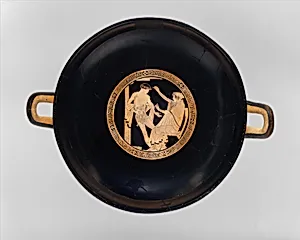
Terracotta kylix (drinking cup)
ca. 480 BCE
Medium
Terracotta
Dimensions
H. 5 3/16 in. (13.2 cm) width with handles 15 3/8 (39.1 cm) diameter 12 1/16 in. (30.7 cm)
Classification
Vases
Culture & Period
Greek, Attic · Classical
Department
Greek and Roman Art
Museum
Metropolitan Museum of Art, New York, NY
Credit
Purchase, Joseph Pulitzer Bequest, 1953
Accession Number
53.11.4
Rights
Public Domain
Tags
Art Historical Context
This elegant terracotta kylix, crafted around 480 BCE by the Briseis Painter, exemplifies the refined artistry of Athenian vase painting during the early Classical period. As a drinking cup used in symposia—social gatherings of elite Greek men—it would have been passed among guests, its interior and exterior scenes gradually revealed as wine was consumed. The vessel’s balanced proportions and delicate handles highlight the technical mastery of Attic potters, who shaped and fired terracotta to create durable yet graceful forms for both daily use and artistic display. The kylix’s decoration draws on rich Greek mythology, featuring figures such as Theseus confronting the Minotaur, alongside Aphrodite and Poseidon. These narratives underscore themes of heroism, divine intervention, and the triumph of civilization over chaos, resonating deeply with Athenian audiences in the wake of the Persian Wars. The Briseis Painter’s red-figure technique allowed for greater anatomical detail and expressive poses, marking a shift toward more naturalistic representations that defined Classical art. Housed in the Metropolitan Museum of Art’s Greek and Roman collection, this work offers modern viewers a vivid window into ancient Greek cultural values and the central role of myth in shaping identity and education.