
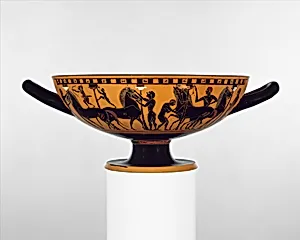
Terracotta kylix (drinking cup)
ca. 540 BCE
Medium
Terracotta
Dimensions
H. 4 7/8 in. (12.4 cm) diameter 10 1/8 in. (25.7 cm)
Classification
Vases
Culture & Period
Greek, Attic · Archaic
Department
Greek and Roman Art
Museum
Metropolitan Museum of Art, New York, NY
Credit
Gift of Norbert Schimmel Trust, 1989
Accession Number
1989.281.62
Rights
Public Domain
Tags
Art Historical Context
This elegant terracotta kylix, a shallow drinking cup used in ancient Greek symposia, was crafted by the renowned Amasis Painter around 540 BCE during Athens' Archaic period. Attributed to this master of the black-figure technique—a method where black slip silhouettes figures, with intricate details incised using a sharp tool—this Attic Greek vase exemplifies the height of early Classical pottery. Measuring just under 5 inches tall and 10 inches across, its wide, low profile made it ideal for communal wine-drinking rituals, where revelers admired painted scenes inside and out. The artwork's vivid imagery draws from Homeric epics like the *Iliad*, featuring dynamic warriors, majestic horses, the sea god Poseidon, and idealized male nudes—hallmarks of Archaic Greek art celebrating heroism and divinity. These motifs reflect the cultural reverence for mythology, athletic prowess, and the human form, blending narrative storytelling with technical precision. The Amasis Painter's lively compositions and expressive figures highlight his innovative style within the black-figure tradition, bridging the rigid Geometric period and the fluid forms of later red-figure vases. Housed in the Metropolitan Museum of Art's Greek and Roman Art department (gift of the Norbert Schimmel Trust, 1989), this kylix offers a window into Archaic Athens' vibrant society, where art, myth, and daily life intertwined.