
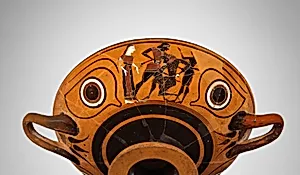
Terracotta kylix: eye-cup (drinking cup)
Unknown Artist
ca. 530 BCE
Medium
Terracotta
Dimensions
H. 5 in. (12.7 cm) diameter 11 7/8 in. (30.2 cm)
Classification
Vases
Culture & Period
Greek, Attic · Archaic
Department
Greek and Roman Art
Museum
Metropolitan Museum of Art, New York, NY
Credit
Rogers Fund, 1909
Accession Number
09.221.39
Rights
Public Domain
Tags
Art Historical Context
Step into the vibrant world of Archaic Greece with this terracotta kylix, or eye-cup drinking vessel, crafted around 530 BCE in Attic workshops. Measuring just 5 inches high and nearly 12 inches across, this shallow cup was designed for the symposion—ancient Greek social gatherings where men reclined, drank wine, and discussed philosophy. Its nickname "eye-cup" comes from the striking pair of large, staring eyes painted on the exterior a playful motif that seems to gaze back at the drinker when lifted to the lips, adding whimsy and perhaps a touch of watchful divinity to the revelry. The interior and exterior scenes burst with mythological drama, featuring the hero Theseus confronting minotaurs, alongside men and women in dynamic poses. Theseus, slayer of the labyrinth-dwelling beast, embodies Athenian pride and heroic ideals, reflecting the cultural obsession with myths that reinforced civic identity. Painted in the black-figure technique typical of the period—where figures are incised through black slip to reveal red clay—this kylix showcases masterful control of form and narrative on a functional object. As a prime example of Attic vase-painting, it highlights the Archaic era's shift toward more expressive storytelling and anatomical detail, bridging the geometric rigidity of earlier pottery to the Classical humanism ahead. Acquired by the Metropolitan Museum of Art in 1909 through the Rogers Fund, this piece invites us to toast to ancient ingenuity and enduring tales of valor.