
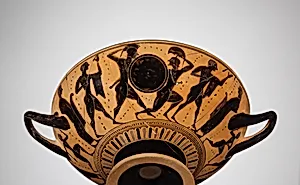
Terracotta kylix (drinking cup)
ca. 550 BCE
Medium
Terracotta
Dimensions
Other: 4 13/16 x 10 in. (12.2 x 25.4 cm)
Classification
Vases
Culture & Period
Greek, Attic · Archaic
Department
Greek and Roman Art
Museum
Metropolitan Museum of Art, New York, NY
Credit
Rogers Fund, 1906
Accession Number
06.1021.159
Rights
Public Domain
Tags
Art Historical Context
Behold the **Terracotta kylix (drinking cup)**, delicate treasure from Archaic Attic Greece, crafted around 550 BCE by the enigmatic Painter of New York .1021.154. This shallow, two-handled cup, measuring just 4 13/16 x 10 inches, was designed for the symposia—lively social gatherings where elite Athenian men reclined, drank wine, and debated philosophy or heroism. Made of fired terracotta, it exemplifies the exquisite vase-painting tradition that turned everyday vessels into storytelling canvases. Adorned with dynamic scenes of warriors, men, and male nudes, the kylix captures the Archaic ideal of the male form: athletic, heroic, and unadorned. These motifs reflect a culture obsessed with martial prowess and physical perfection, evoking the hoplite warriors of the Greek phalanx. The painter's precise black-figure technique—incising details into glossy black slip to reveal red clay beneath—highlights the period's shift toward more narrative sophistication before the red-figure revolution. Acquired through the Rogers Fund in 1906, this piece from the Metropolitan Museum of Art's Greek and Roman collection offers a window into daily life and mythology 2,500 years ago. Imagine sipping from it amid torchlight and lyre music— a perfect emblem of ancient conviviality and valor!