
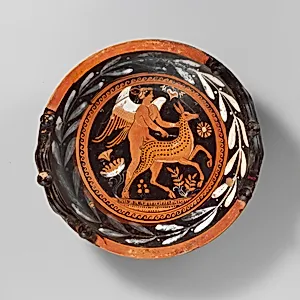
Terracotta lekanis (dish)
ca. 340–320 BCE
Medium
Terracotta
Dimensions
diameter 11 13/16in. (30cm)
Classification
Vases
Culture & Period
Greek, South Italian, Apulian · Late Classical
Department
Greek and Roman Art
Museum
Metropolitan Museum of Art, New York, NY
Credit
Purchase by subscription, 1896
Accession Number
96.18.30
Rights
Public Domain
Tags
Art Historical Context
This elegant terracotta lekanis, created around 340–320 BCE in the Greek colonies of South Italy, exemplifies the refined artistry of Apulian vase painting during the Late Classical period. Produced by the Group of Bologna 585/Trieste S 403, the shallow dish—measuring about 30 centimeters in diameter—features delicate painted scenes involving Eros, the god of love, alongside a deer. Such motifs were popular in Apulian ceramics, often evoking themes of nature, fertility, and the divine. Apulian pottery like this reflects the cultural vibrancy of Magna Graecia, where Greek settlers blended local traditions with mainland styles. The red-figure technique allowed artists to render figures with greater naturalism and detail against the terracotta surface, transforming everyday vessels into storytelling objects. Lekanides were typically used for cosmetics, jewelry, or ritual offerings, highlighting their role in both domestic life and ceremonial practices. Acquired by the Metropolitan Museum in 1896, this piece offers a window into the sophisticated workshops of ancient Apulia. Its compact form and mythological imagery invite viewers to appreciate how Greek colonists adapted classical ideals to express beauty, mythology, and the rhythms of the natural world.