
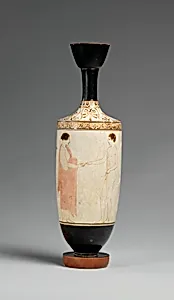
Terracotta lekythos (oil flask)
ca. 440 BCE
Medium
Terracotta
Dimensions
H.: 12 x 3 9/16 in. (30.5 x 9 cm)
Classification
Vases
Culture & Period
Greek, Attic · Classical
Department
Greek and Roman Art
Museum
Metropolitan Museum of Art, New York, NY
Credit
Rogers Fund, 1908
Accession Number
08.258.18
Rights
Public Domain
Tags
Art Historical Context
This elegant terracotta lekythos, crafted by the Achilles Painter around 440 BCE, exemplifies the refined artistry of Classical Attic Greece. A slender oil flask typically used for perfumed oils in funerary rituals or daily grooming, its white-ground technique—where a pale clay slip creates a luminous backdrop—sets it apart from the more common black- or red-figure vases. Standing just over 12 inches tall, this intimate vessel from the Metropolitan Museum of Art invites close contemplation of its delicate details. The Achilles Painter, named after his masterful depiction of Achilles on another vase, was a leading figure in late Classical red-figure pottery, blending dynamic poses with emotional depth. Here, the scenes likely feature male nudes and women, hallmarks of Greek ideals of beauty and heroism, rendered with precise incision lines and subtle color washes that highlight anatomy and drapery. This style marked a shift toward more narrative intimacy, reflecting Athens' cultural zenith during the Peloponnesian War era. As a funerary object, the lekythos held profound cultural significance, often placed in tombs to honor the dead. Its survival speaks to the enduring legacy of Attic vase-painting, bridging everyday life with the divine and offering modern viewers a window into ancient Greek values of grace, mortality, and the human form.
About the Artist
Achilles Painter
**The Achilles Painter** was a leading Athenian vase painter of the Classical period, active approximately from 470 to 425 BC. His conventional name derives from his name vase, a red-figure amphora (Vatican 16571) now in the Vatican Museums that depicts the hero Achilles in a pensive, armored pose, dated around 450–445 BC. As an Attic artist working in the red-figure technique, he produced works t...