Ctrl K
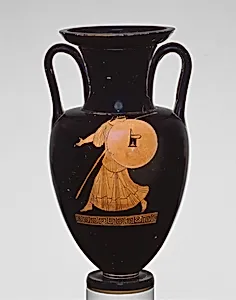
**The Achilles Painter** was a leading Athenian vase painter of the Classical period, active approximately from 470 to 425 BC. His conventional name derives from his name vase, a red-figure amphora (Vatican 16571) now in the Vatican Museums that depicts the hero Achilles in a pensive, armored pose, dated around 450–445 BC. As an Attic artist working in the red-figure technique, he produced works that capture the serene yet expressive spirit of Athens at its cultural peak under Pericles, aligning with the era of the Parthenon sculptures and the sculptor Phidias.
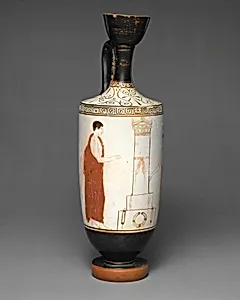
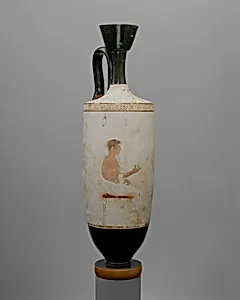
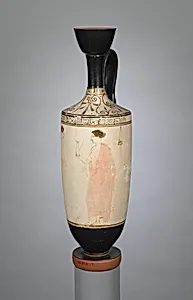
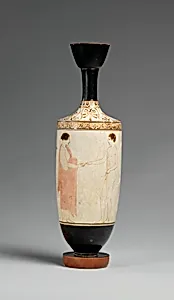
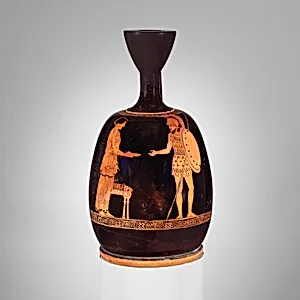
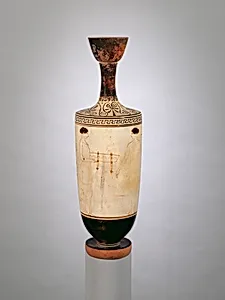
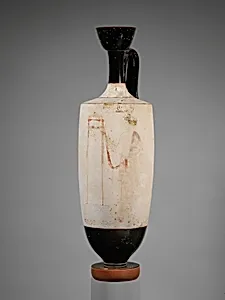
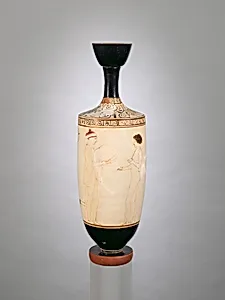
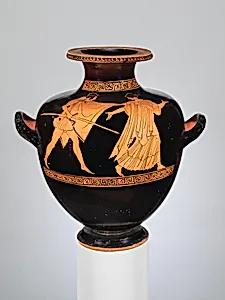
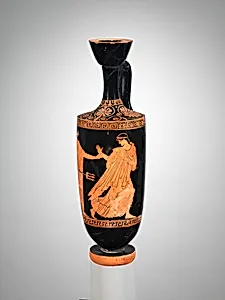
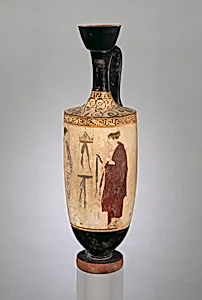
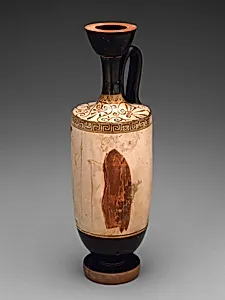
He trained in the workshop of the Berlin Painter and eventually took it over, becoming a late pupil who carried forward his mentor’s refined approach while developing his own distinctive style. The Achilles Painter excelled in both red-figure pottery and the demanding white-ground technique, particularly on funerary lekythoi—tall oil flasks used in burial rituals. His figures are noted for their delicate drawing, gentle demeanor, and pensive, almost melancholy quality, conveying an inner serenity amid themes of farewell, mourning, and heroic resolve. Over 200 vases have been attributed to him on stylistic grounds, with a particular mastery of white-ground lekythoi that scholars regard as the best surviving reflections of lost monumental wall paintings from the Classical age.
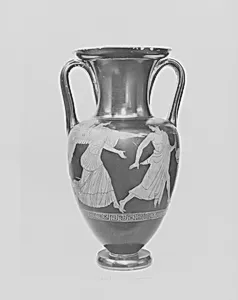
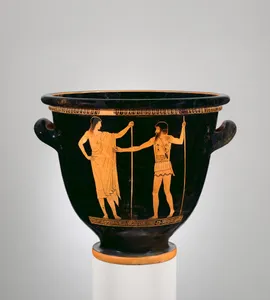
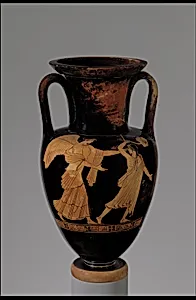
Among his notable works are the name amphora itself, showing Achilles gazing pensively while a woman performs a libation on the reverse, as well as white-ground lekythoi such as “Girl Bringing a Casket to Her Mistress” (Museum of Fine Arts, Boston) and scenes of warriors arming or bidding farewell to loved ones. He also decorated more open forms in his middle phase and produced pointed amphorae of exceptional quality. His output reflects the high classical ideals of harmony, expressiveness, and emotional depth.
The Achilles Painter’s legacy endures through the influence he exerted on subsequent generations; his most prominent student, the Phiale Painter, continued his workshop traditions, and other painters including the Persephone Painter and Kleophon Painter passed through it. His sensitive portrayals helped define the classical aesthetic in vase painting, and his white-ground lekythoi remain among the masterpieces of ancient draftsmanship, offering invaluable insight into Greek funerary practices and artistic ideals. Greece even honored one of his lekythoi designs with a postage stamp in 1962. With seventeen works in the museum’s collection, his contributions continue to illuminate the artistic achievements of ancient Athens.