
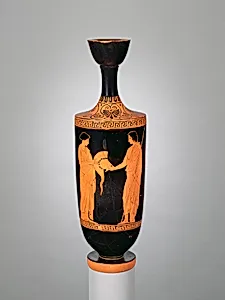
Terracotta lekythos (oil flask)
ca. 440–430 BCE
Medium
Terracotta
Dimensions
H.: 14 1/4 x 4 3/8 in. (36.2 x 11.1 cm)
Classification
Vases
Culture & Period
Greek, Attic · Classical
Department
Greek and Roman Art
Museum
Metropolitan Museum of Art, New York, NY
Credit
Rogers Fund, 1908
Accession Number
08.258.23
Rights
Public Domain
Tags
Art Historical Context
Step into the world of Classical Athens with this elegant terracotta lekyth, an oil flask crafted by the Phiale Painter around 440–430 BCE.ic Greek potters like him specialized in these slender vessels, typically used to hold perfumed oils for daily rituals or as grave offerings. Standing just over 14 inches tall, graceful shape—narrow neck and bulbous body—made it perfect for pouring small amounts, while its white-ground technique allowed for delicate, detailed paintings that stand out against the pale clay slip. The Phiale Painter, named for his signature motif of a libation bowl, was a master of the late Classical style, blending the refined red-figure tradition with innovative white-ground decoration. This vase likely features men and women, with helmets hinting at a poignant scene—perhaps a warrior bidding farewell or being mourned, common in funerary lekythoi. These intimate narratives captured everyday emotions amid life's transitions, showcasing the Athenians' deep reverence for the heroic ideal during the Peloponnesian War era. Acquired by the Metropolitan Museum of Art in 1908 through the Rogers Fund, this piece offers a window into ancient Greek culture, where art intertwined with spirituality and memory. Its survival speaks to the enduring craft of Attic vase-painters, whose works illuminated both the living and the afterlife.