
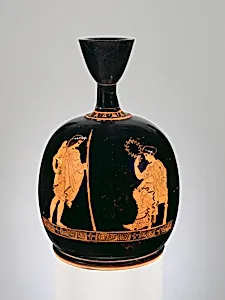
Terracotta squat lekythos (oil flask)
ca. 430–420 BCE
Medium
Terracotta
Dimensions
H.: 9 1/4 x 6 1/8 in. (23.5 x 15.6 cm)
Classification
Vases
Culture & Period
Greek, Attic · Classical
Department
Greek and Roman Art
Museum
Metropolitan Museum of Art, New York, NY
Credit
Gift of Samuel G. Ward, 1875
Accession Number
75.2.14
Rights
Public Domain
Tags
Art Historical Context
This elegant terracotta squat lekythos, created around 430–420 BCE by the Washing Painter, exemplifies the refined artistry of Classical Greek pottery from Athens. As an oil flask, its compact, rounded form made it ideal for holding precious liquids such as perfumed oils used in daily life, athletic training, or funerary rituals. The vessel’s modest scale—standing just over nine inches tall—highlights the Attic tradition of producing finely decorated household items that blended utility with aesthetic appeal. The decoration, featuring men and women adorned with wreaths, reflects the social and ceremonial customs of ancient Athens during the height of its cultural flourishing. Wreaths often symbolized victory, celebration, or religious devotion, suggesting the scene may evoke a domestic or festive moment. The Washing Painter’s distinctive hand is evident in the graceful figures and balanced composition typical of red-figure vase painting, a technique that allowed for greater naturalism and detail compared to earlier black-figure styles. Acquired by the Metropolitan Museum of Art in 1875 as a gift from Samuel G. Ward, this lekythos offers modern viewers a tangible connection to the everyday elegance of Classical Greece. Its preservation underscores the enduring value placed on Attic ceramics as both functional objects and sophisticated works of art.