
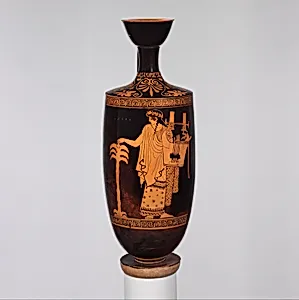
Terracotta lekythos (oil flask)
ca. 460–450 BCE
Medium
Terracotta
Dimensions
H. 15 in. (38.1 cm)
Classification
Vases
Culture & Period
Greek, Attic · Classical
Department
Greek and Roman Art
Museum
Metropolitan Museum of Art, New York, NY
Credit
Gift of Mr. and Mrs. Leon Pomerance, 1953
Accession Number
53.224
Rights
Public Domain
Tags
Art Historical Context
This elegant terracotta lekythos, an oil flask created in Athens around 460–450 BCE, reflects the refined artistry of the Classical period in ancient Greece. Attributed to the Nikon Painter, it was made using the red-figure technique, in which figures were carefully reserved in the clay’s natural red hue against a glossy black background. Lekythoi like this one typically held olive oil for anointing the body and were frequently placed in graves as offerings, underscoring their role in both daily life and funerary customs. The painted decoration includes Apollo, the god of music and poetry, accompanied by men playing lyres and framed by palm fronds. These motifs evoke themes of divine inspiration, harmony, and sacred celebration central to Athenian religious and cultural life. The palm trees may allude to Apollo’s sanctuaries or to victory and renewal, enriching the vessel’s narrative depth. Standing just fifteen inches tall, this vase exemplifies the skill of Attic workshops whose products were traded across the Mediterranean. Its graceful form and thoughtful imagery offer modern viewers a direct connection to the artistic and spiritual world of fifth-century BCE Athens.