
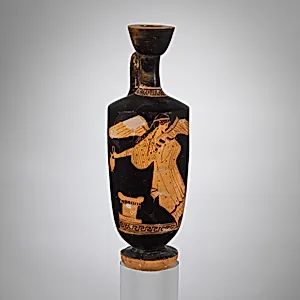
Terracotta lekythos (oil jar)
ca. 480–470 BCE
Medium
Terracotta
Dimensions
H. 10 15/16 in. (27.8 cm) diameter 3 11/16 in. (9.4 cm)
Classification
Vases
Culture & Period
Greek, Attic · Classical
Department
Greek and Roman Art
Museum
Metropolitan Museum of Art, New York, NY
Credit
Rogers Fund, 1941
Accession Number
41.162.88
Rights
Public Domain
Tags
Art Historical Context
This delicate terracotta lekyth, or oil jar, crafted by the Painter of Palermo 4 around 480–470 BCE, exemplifies Classical Attic Greek vase painting. Standing just under 11 inches tall, these slender vessels were essential for storing perfumed oils and ointments, often used in daily rituals or as grave offerings to honor the deceased. Its white-ground technique—where a pale clay slip created a luminous background—allowed for subtle, detailed scenes in outline and dilute glaze, marking a shift from bolder black- and red-figure styles toward more refined, intimate storytelling. The decoration likely features Nike, the winged goddess of victory, alongside altars, evoking themes of divine ritual and triumph central to Greek religious life. Such imagery on lekythoi reflected the era's growing emphasis on personal piety and the afterlife, bridging everyday devotion with eternal commemoration. Attributed to an anonymous master named after a key vase in Palermo, this piece showcases the painter's mastery of graceful figures and symbolic motifs. Housed in the Metropolitan Museum of Art's Greek and Roman Art department (Rogers Fund, 1941), it offers a window into Athens' golden age, where pottery was both functional art and cultural narrative, blending beauty with profound spiritual resonance.