
Terracotta lekythos (oil flask)
ca. 430 BCE
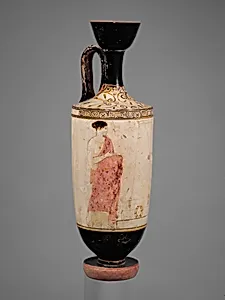
Medium
Terracotta
Dimensions
H. 12 1/2 in. (31.8 cm)
Classification
Vases
Culture & Period
Greek, Attic · Classical
Department
Greek and Roman Art
Museum
Metropolitan Museum of Art, New York, NY
Credit
Bequest of Walter C. Baker, 1971
Accession Number
1972.118.145
Rights
Public Domain
Tags
Art Historical Context
This elegant terracotta lekythos, crafted by the Thanatos Painter around 430 BCE, exemplifies Attic Greek vase painting from the Classical period. Standing just over 12 inches tall, served as an oil flask, typically used in funerary rituals to hold perfumed oil for anointing the deceased. The Thanatos Painter, named for his poignant depictions of the god Thanatos (Death), specialized in white-ground lekyoi—vases with a pale clay slip background that allowed delicate colors and details to shine, evoking a sense of ethereal mourning. The artwork likely features women at a tomb, a common motif reflecting Athenian burial customs where female relatives visited graves to offer libations and garlands. This intimate scene captures the emotional depth of loss in ancient Greek society, blending realism with subtle symbolism. Such vases were often placed in tombs as grave goods, bridging the living and the dead. Housed in the Metropolitan Museum of Art's Greek and Roman Art department, this piece highlights the Thanatos Painter's mastery of narrative pottery, offering a window into Classical Athens' reverence for the afterlife and the role of women in rituals. Its bequest from Walter C. Baker in 1971 preserves this touching artifact for modern visitors.