
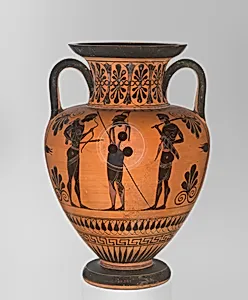
Terracotta neck-amphora (jar)
ca. 530 BCE
Medium
Terracotta
Dimensions
16 1/4 × 11 1/2 in. (41.3 × 29.2 cm)
Classification
Vases
Culture & Period
Greek, Attic · Archaic
Department
Greek and Roman Art
Museum
Metropolitan Museum of Art, New York, NY
Credit
Gift of F. W. Rhinelander, 1898
Accession Number
98.8.13
Rights
Public Domain
Tags
Art Historical Context
This striking terracotta neck-amphora, created around 530 BCE by the renowned Athenian artist Exekias, exemplifies the height of Archaic Greek vase painting. Standing just over sixteen inches tall, the vessel was crafted in the black-figure technique, in which figures were painted in slip that fired to a glossy black against the natural red clay of Attica. Exekias was celebrated for his precise draftsmanship and ability to convey narrative drama within the curved surfaces of pottery, making this jar both a functional storage vessel and a sophisticated work of art. The amphora’s decoration draws on episodes from the Trojan War, featuring the gods Apollo and Hermes alongside mortal figures. Such mythological subjects were especially popular on vessels used in elite symposia and funerary rituals, where they sparked conversation and reflected the Greeks’ deep engagement with epic poetry. Exekias’s restrained yet expressive compositions helped elevate pottery painting to a respected art form during the sixth century BCE. Today in the Metropolitan Museum of Art, the amphora offers visitors a vivid window into ancient Athenian culture, where myth, craftsmanship, and daily life intertwined. Its survival across more than two millennia underscores the enduring appeal of Exekias’s masterful storytelling.