
Terracotta neck-amphora (jar)
ca. 500 BCE
Medium
Terracotta
Dimensions
H. 10 1/2 in. (26.7 cm); width of mouth 4 1/2 in. (11.4 cm)
Classification
Vases
Culture & Period
Greek, Attic · Archaic
Department
Greek and Roman Art
Museum
Metropolitan Museum of Art, New York, NY
Credit
Gift of El Conde de Lagunillas, 1956
Accession Number
56.49.1
Rights
Public Domain
Tags
Art Historical Context
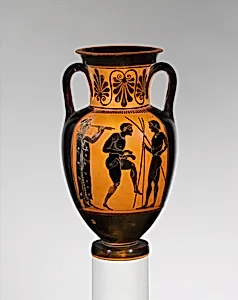
This elegant terracotta neck-amph, crafted by the Edinburgh Painter around 500 BCE, exemplifies the artistry of Archaic Attic Greece. Standing just 10½ inches tall with a 4½-inch mouth, this two-handled jar was likely used for storing olive oil or wine, essential commodities in ancient Athenian households and symposia. As a product of Athens' renowned pottery workshops, it reflects the period's mastery of wheel-thrown terracotta, fired to a warm reddish hue and adorned with painted scenes that captured everyday ideals of beauty and prowess. The vase's decorations feature athletic men and musicians playing flutes, evoking the vibrant world of Greek male socialization. Athletes symbolize physical excellence, a cornerstone of Archaic values celebrated in festivals like the Panathenaia, while flutists hint at musical performances during communal feasts. The Edinburgh Painter, named for a signature work in Edinburgh, contributed to the late Archaic tradition of narrative vase-painting, blending realism with stylized forms to immortalize these cultural touchstones. Today, this gift to the Metropolitan Museum of Art from El Conde de Lagunillas in 1956 invites us to ponder the ancients' harmonious blend of body, music, and ritual—reminders of a society where art elevated the ordinary.