
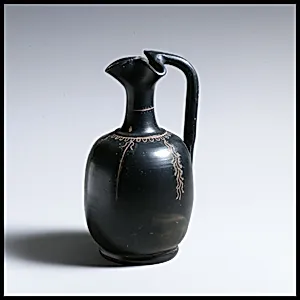
Terracotta oinochoe (jug)
Unknown Artist
ca. 330–300 BCE
Medium
Terracotta
Dimensions
H. 6 5/8 in. (16.8 cm)
Classification
Vases
Culture & Period
Greek, South Italian, Campanian, Teano · Hellenistic
Department
Greek and Roman Art
Museum
Metropolitan Museum of Art, New York, NY
Credit
Rogers Fund, 1909
Accession Number
09.221.46p
Rights
Public Domain
Art Historical Context
This delicate terracotta oinocho, or wine jug, hails from the Hellenistic period around 330–300 BCE, crafted in the South Italian region of Campania near Teano. Standing just 6 5/8 inches (16.8 cm) tall, it exemplifies the everyday elegance of Greek colonial pottery in Magna Graecia—southern Italy's vibrant hub of Hellenic culture. Oinochoai like this were essential for symposia, the lively social gatherings where wine was poured and stories shared, blending utility with artistic finesse. Made from fired clay, the jug reflects advanced wheel-throwing techniques that allowed for slender, graceful forms. South Italian workshops, influenced by mainland Greece yet distinctly regional, produced such vases in vibrant styles, often adorned with mythological scenes or daily life motifs (though specifics here remain unrecorded). Its Hellenistic origins mark a shift toward more dynamic, expressive art following Alexander the Great's conquests, capturing a world of cultural fusion. Acquired through the Rogers Fund in 1909, this piece now graces the Metropolitan Museum of Art's Greek and Roman Art department. It offers a tangible glimpse into ancient rituals, reminding us how even humble vessels carried the spirit of a thriving civilization.